Before you set your 2027 tech budget, read this
Three things keep coming up in 2027 planning: maintain first, use AI on real problems, and sequence big changes so the business keeps moving.

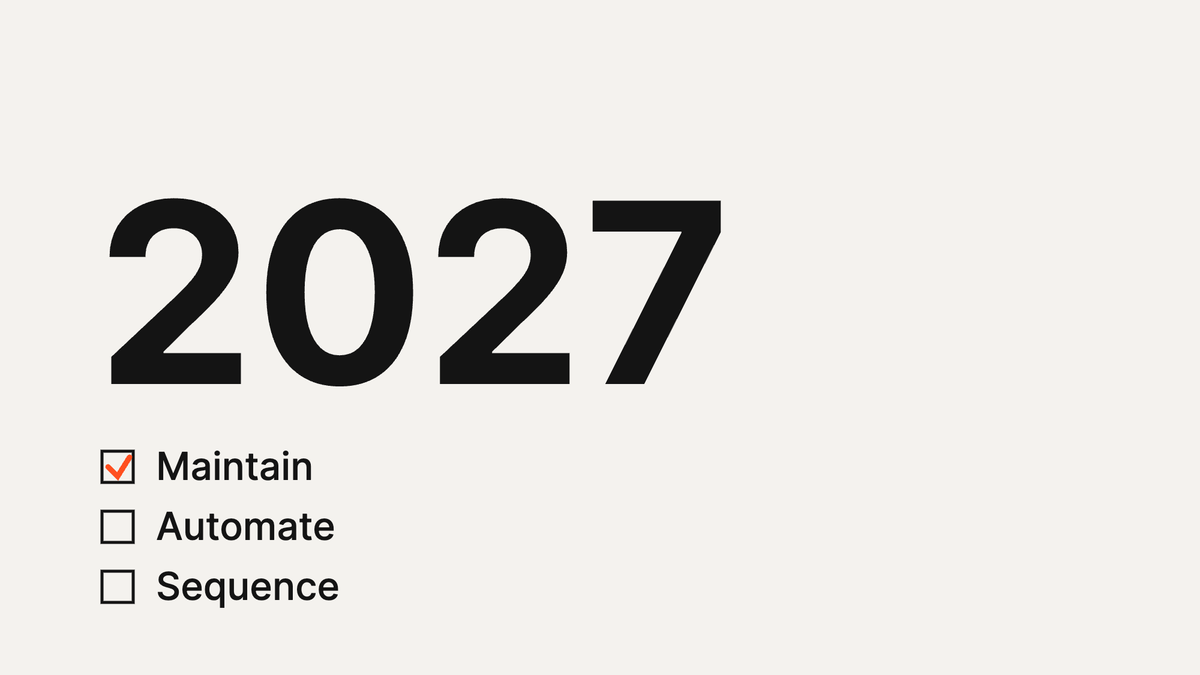
As 2027 plans take shape, the same three topics keep coming up with the marketing and growth teams we work with as their tech partner.
- Keep the basics maintained.
- Use AI where it solves a real problem.
- Sequence big changes so the business doesn't stall while they happen.
None of this is new. What's changed is how much it costs to get distracted or get it wrong.
1/ Maintain first: the basics go a long way
Most of the problems we/Axioned are called in to fix start with something that wasn't kept up to date. October gave us a clear example.
On 21 October, PHP shipped emergency fixes for two critical flaws, CVE-2026-109618 and CVE-2026-109619. Both are rated 9.2 out of 10 and can let an attacker run code on a server without logging in. PHP is the language underneath WordPress, Drupal, Magento and Craft CMS.
The part many teams missed: updating the site and its plugins didn't fix it, because the flaw sits in PHP itself. What mattered was whether the server had moved to a patched version (8.5.12, 8.4.27, 8.3.36 or 8.2.35). Sites on managed hosts like WP Engine, Kinsta or Pantheon were largely covered quickly. The real exposure was in sites that were built, launched and left alone — the old blog, the campaign microsite, the forgotten staging server.
There's a newer wrinkle too. Part of the discovery was credited to a researcher using an OpenAI model. AI is making flaws faster to find, which shortens the gap between a fix being published and someone trying to exploit the sites that haven't applied it. A well-maintained site is worth more than it was a year ago.
2/ AI should solve a real problem
The best results we've seen start small: one workflow, measured, then expanded. Usually it's a repetitive job that nobody should be doing by hand.
For example: Recently our team needed to move 90+ pages into a new website. Rebuilding them one by one would have taken days. Instead we automated the migration and finished it in a single day, including setup, quality checks and final sign-off. We applied the same thinking to generating alt text across thousands of images and to keeping data flowing between systems without someone copying it across.
The question we keep asking is simple: does a person actually need to be doing this?
3/ Sequence the big changes
Rebuilds look straightforward on a project plan. Build, migrate, test, launch. In reality, there's a messy middle.
The existing site still has a job to do, and urgent changes can't wait for its replacement. Hundreds of pages need moving, forms need to keep working, search visibility needs protecting and redirects need mapping. All of it happens while other changes continue in parallel.
As Smita, one of our Software Testers, put it: "One of the biggest challenges was testing a website with a very large amount of migrated content while also keeping up with UI and functional changes happening in parallel."
Doubling up like this isn't the only route. With another client, the long-term goal is a full tech stack overhaul, but doing it all at once isn't the right commercial call. So we're working out where investment has the greatest impact first, what can wait and which improvements are most likely to pay back.
One more for the list: showing up in AI search
When buyers ask ChatGPT, Claude or Google's AI Overviews for a recommendation, they get a handful of names, not a page of links. Getting into that shortlist rests on the same foundations as SEO: clear entity data, structured content and pages that answer real buyer questions. Being cited on the sites those tools trust matters too.
Before you commit your 2027 budget
The biggest problem isn't always the best place to start. Ask your team three questions:
- What's costing us the most right now, including small tasks we repeat every week?
- What would improve if we fixed it, and does that need a big project or just the right fix?
- What's the risk if we don't maintain or upgrade it?
We're also asking our network what's on their 2027 tech list. We'll share the results in January, with no names or companies included. (Survey link will be added here soon!)
Want a second opinion on your 2027 list? Book 30 minutes with me.
Libby Swan, CEO & Co-Founder, Axioned — your tech partner for velocity and growth.